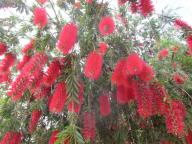
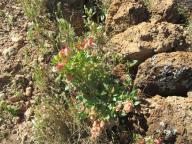
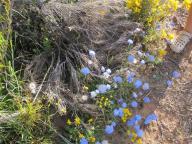
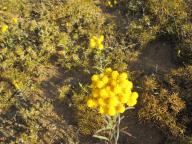
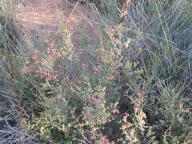
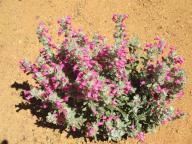
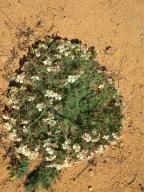
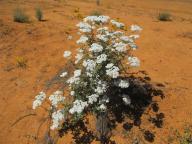
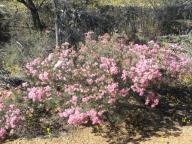
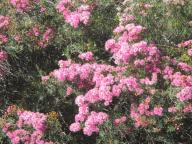
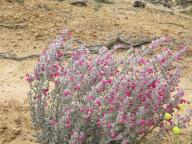
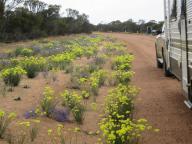
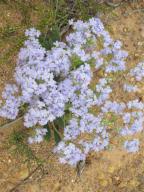
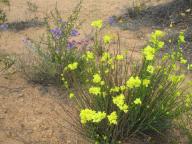
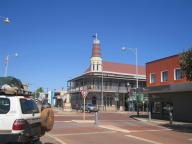
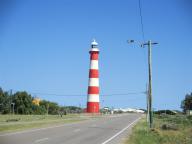
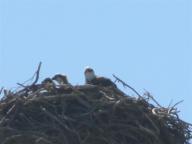
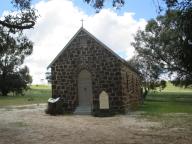
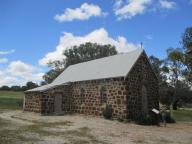
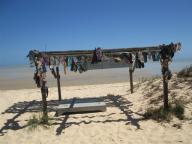
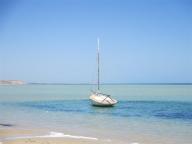
This is a route which stretches some 390 Kms, starting out of Geraldton. Firstly east for some 80 Kms and then south. The trip highlights the amazing natural wild flowers of the area. Unfortunately, this year was not apparently one of the best and we were just a little late to catch the wild flowers at their most impressive. Even so, the pictures tell their own story.
Category: 67 2014
Geraldton
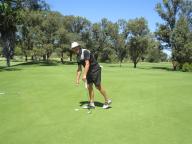
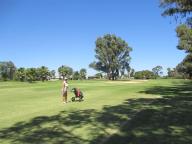
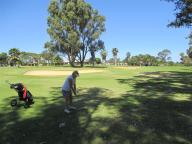
Geraldton – the second largest city in WA and a pleasant place to stay for a few days to rest up from the constant travelling. We also played both the local golf courses – time to get into the swing for the Championships in Margaret River in November.
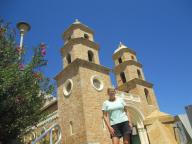
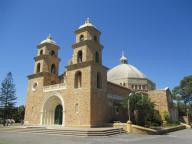
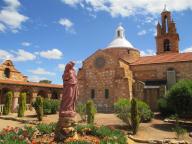
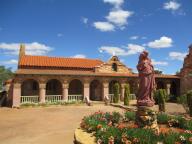
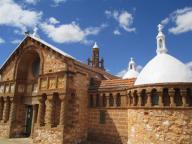
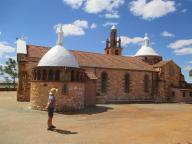
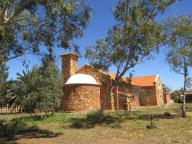
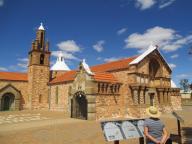
Geraldton Cathedral
Not normally one of our focus points – religious establishments, but this cathedral is beautiful and there is also a story behind its designer, Monsignor Hawes. John Cyril Hawes was born September 7th, 1876 in Richmond, England. He studied architecture and 1903 he was ordained as an Anglican Deacon in St Paul’s Cathedral, London. Hawes converted to Catholicism in New York in 1911. Just four years later he was ordained a Catholic Priest in Rome.
Hawes arrived in Western Australia at the beginning of November 1915. To cut a very long story short, Hawes designed many religious establishments in the following years and we visited many of these as we traveled south from Geraldton.
National Memorial To HMAS Sydney II, Geraldton
Sorry for this lengthy post but we found it fascinating and wanted to share the details of the memorial to the HMAS Sydney II lost off this coast in World War II.
This memorial was recently voted the top tourist attraction in Western Australia. We followed a volunteer guide through the memorial and learnt some really amazing facts about the loss of the warship and the history of the memorial itself. It is located on Mount Scott, overlooking Geraldton and the Indian Ocean. The same ocean where HMAS Sydney II fought its last battle and was sunk with the loss of all 645 men. The original memorial contained four separate elements and since the discovery of the HMAS Sydney II on 17th March 2008, a fifth and final element has been completed. Each element has its own story.
The Wall of Remembrance encompassing the south-west side is a semi-circular wall, faced with Western Australian Black Granite, engraved with the names of the 645 men lost. This represents the ‘encircling Arms of the Nation’ welcoming home it’s lost loved ones. The exterior face of the wall is sculpted with a low relief motif emblematic of the eternal sea. At the Entrance Portal, historic photographic images of HMAS Sydney II, bring to life the reality of the tragedy.
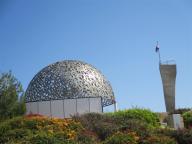
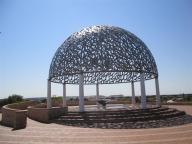
The Dome of Souls, a stainless steel dome is comprised of 645 seagulls representing each of the 645 lost sailors. The concept was inspired by the incident, when a flock of silver Gulls swooped over the assembled crowd, during the Memorial Site Dedication Ceremony, 19th November 1998, while the Last Post rang out in the evening air, at sunset, the last recorded moment in time when HMAS Sydney was seen. Traditionally, the seagull personified the souls of lost sailors and in this context these elemental symbols form a link with the men of HMAS Sydney II, as spirits flying free between water and sky. The canopy thus formed, becomes an open filigree stainless steel structure, redolent of the sound of sea and wind creating a sense of disembodiment and peace, as a graceful distillation of the overall concept. The eternal flame, set in port and starboard lights within the Dome of Souls, was lit on November 19, 2001, 60 years after the sinking of the HMAS Sydney II off the Geraldton coast. The flame was lit from the “Eternal Flame” at the War Memorial in King’s Park.
The Stele – based on the historical symbolism of Standing Stones as grave makers, this vertical element in stainless steel, represents the prow of HMAS Sydney II, metaphorically in a single dramatic gesture, while providing a major focal point visible from many miles around. A spectacular component of the memorial, best enjoyed as you look upwards from a close distance. Interestingly, after the wreck was located, it was found that the Sydney sank with its prow actually separated, caused by the explosion of a torpedo.
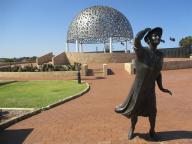
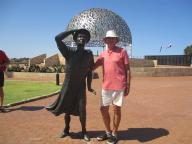
The Waiting Woman – this sculpture represents the anxious mothers and relatives looking for the return of their sons serving on the HMAS Sydney II. A powerful picture of the bonds of love strained from the uncertainty of their fate, hoping against all odds that they will appear over the horizon. Again a fascinating fact – the sculpture was erected quite some time before the Sydney wreck was located but the sculpture is found to be looking directly towards the wreck location.
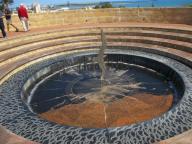
The Pool Of Rembrance, the fifth and final element, was added following the discovery of the wreck. The final concept is a simple, recessed pool, approached by circular terracing symbolically descending ‘down’ into the depths, as it were, evocative of the war grave where the ship now silently rests on the sea floor, 120 nautical miles off Steep Point. The floor of the pool is a map, 5 meters across, showing the location of HMAS Sydney II, embedded in coloured granite. A 2 meter high Stainless Steel gull is fixed to the exact spot where the Sydney lies, with the co-ordinates radiating out from this, both on the exact bearing towards the wreck site. 26 14 45 S – 111 12 55 E. A circular waterfall pouring out from under the bottom terrace dramatically reinforces the concept of ‘going down into the depths’ Inspired by the shadow pattern of the gulls under the Dome of Souls, the lowest step is formed in polished black granite into which is engraved images of 644 Silver Gull shadows, circling the pool and the ship. The 2 meter high vertical Silver Gull is Number 645.
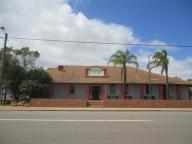
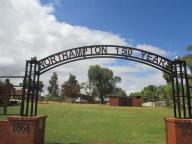
Northampton
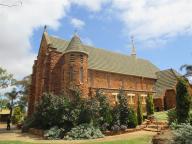
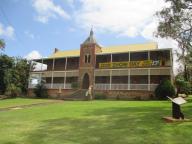
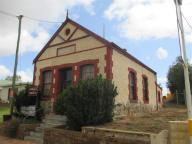
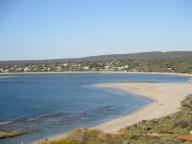
On our way down to Geraldton we pass through the lovely town of Northampton which contains some very attractive examples of historic buildings dating back to the late 1800’s when it was settled by miners looking for the local tin and lead deposits.
Port Gregory And The Pink Lake
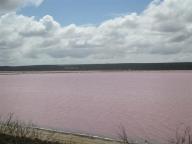
Just south of Kalbarri, we visit Port Gregory, a tiny coastal village and its famous Pink Lake. The Pink Lake (official name Hutt Lagoon) is a salt lake with a pink hue caused by the presence of a carotenoid producing algae which is a source of beta-carotene, a food colouring agent and source of Vitamin A. The lagoon contains the world’s largest microalgae production plant.
Kalbarri
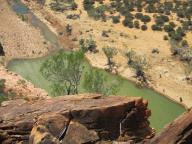
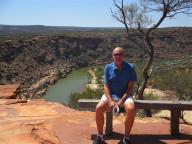
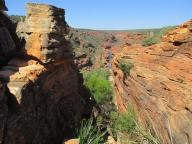
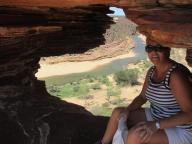
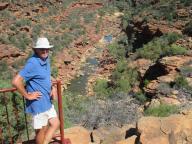
Still making slow progress south towards Perth, our next highlight is Kalbarri National Park. We stay in the nearby coastal town of Kalbarri itself which is yet another seaside oasis with a small town feeling. The National Park is really something special with the highlight being ‘Nature’s Window’. This is a rock formation which beautifully frames the rugged upstream view of the Murchison River – outstanding.
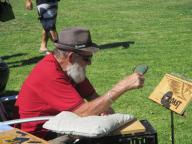
Spot the unique artist who creates artifacts using the sun’s rays.
Denham
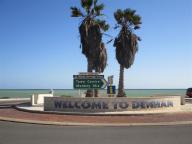
We visited Denham from our base at Hamelin Station. Denham is on the western coast of the Peron Peninsula 831 Kms (516 mi) north of Perth. It is the westernmost town in Australia, and is named in honour of Captain Henry Mangles Denham of the Royal Navy, who charted Shark Bay in 1858. Today Denham survives as the gateway for the tourists who come to see the dolphins at Monkey Mia – which is a complete rip off and well worth missing, which we did.
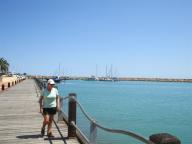
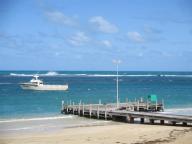
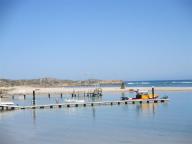
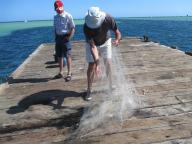
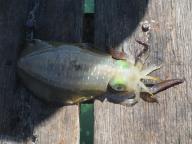
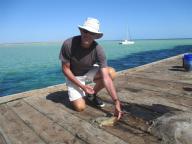
Denham is a lovely quiet seaside town with a relaxed atmosphere. A stroll along the short jetty found us observing 2 or 3 people trying to catch the very visible squid close by. They didn’t seem at all interested in the squid jigs on offer so Bob tried plan B. Off to the car for the cast net and Bingo – 2 of the slippery devils into the freezer for later !
Hamelin Station
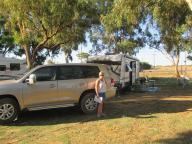
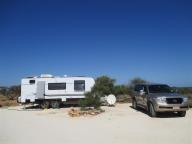
Hamelin Station is a working sheep and goat station close to Shark Bay on the west coast of WA. This was bush camping at its best with by far the most well looked after facilities we have encountered so far. A small bit of trivia we learnt from the owners – the USA is the world’s largest importer of goat meat.
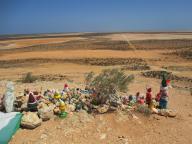
On the way to Hamelin Station we came across an unusual sight – a memorial to a small girl who must have died in an accident close by. The memorial consisted of a mound of rocks with a garden gnome on top. Since the original memorial lots more gnomes have been added in remembrance of other loved ones who have passed away.
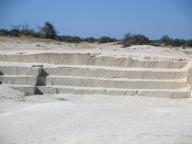
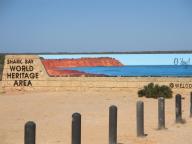
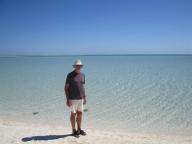
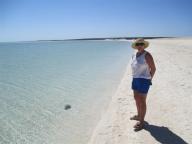
We visited the famous shell beach which is a 140 Km long beach made of the smallest and whitest shells we have ever seen. Over the years these shells formed hardened rock-like material which was quarried in the form of large blocks which was used to erect large buildings in the area.
Close to Hamelin Station we find one of only a few remaining areas of Stromatolites or stromatoliths. Apparently these provide important clues to the origins of life on earth. The structures formed in shallow water by the trapping, binding and cementation of sedimentary grains by biofilms (microbial mats) of microorganisms, especially cyanobacteria. They provide ancient records of life on Earth by fossil remains which might date from more than 3.5 billion years ago. In the future given the option of viewing stromatolites or watching paint dry, the latter would be the most attractive.
Carnarvon
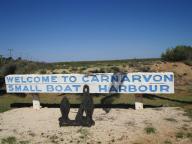
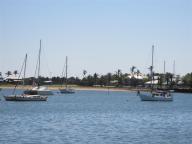
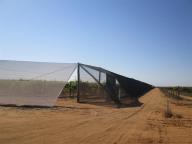
At long last, Perth is less than 1,000 Kms away (but only just!). Carnarvon lies at the mouth of the Gascoyne River which only flows for an average of 6 weeks per year. It is positioned between Shark Bay to the south and Ningaloo Reef to the north. The area is one of the largest market gardening areas in WA. Unfortunately we were a little early in the year for most of the locally grown fresh fruit and vegetables. But we did sample some of the local tiger prawns which were delicious.