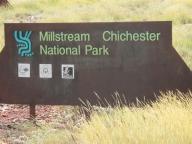
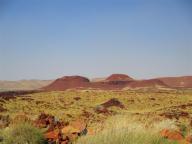
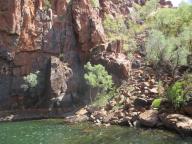
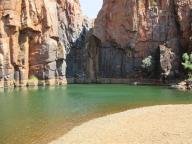
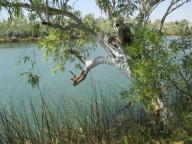
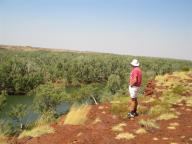
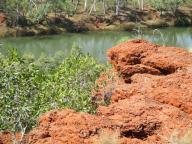
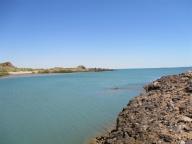
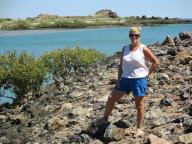
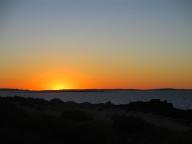
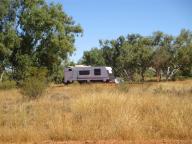
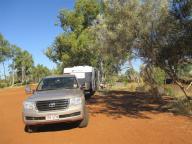
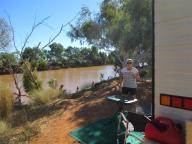
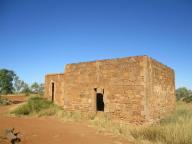
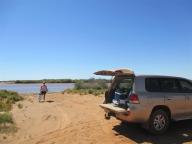
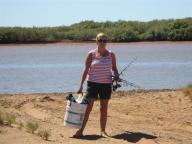
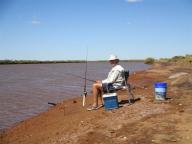
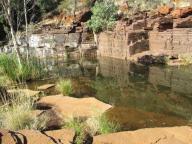
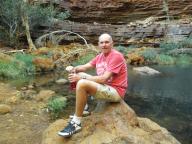
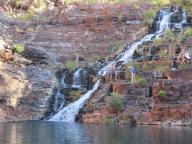
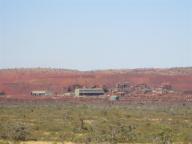
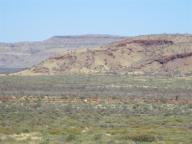
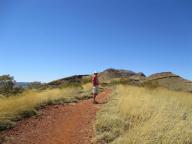
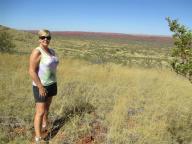
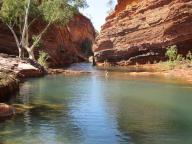
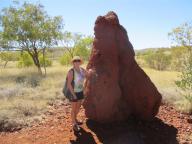
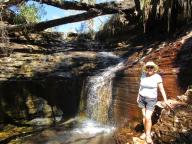
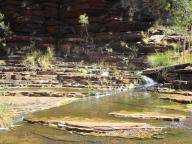
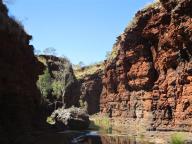
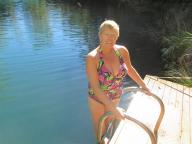
The Millstream Chichester National Park has fantastic views across the Hammersley Ranges, with rolling hills, spectacular escarpments and tree lined water courses, including Python Pool and the large Fortescue River. The park is made up of the old Millstream station which is on the Millstream Creek, just before it joins Fortescue River one of the few permanent watercourses in the area and the Chichester Range. The area is homeland of the Yinjibarndi people, who work as Rangers and contractors in the Park.
Category: 67 2014
Fishing At Cleaverville And Golf At Karratha
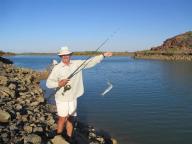
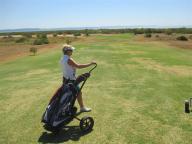
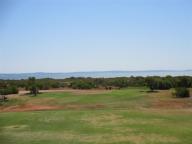
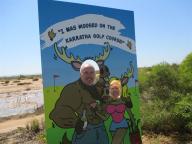
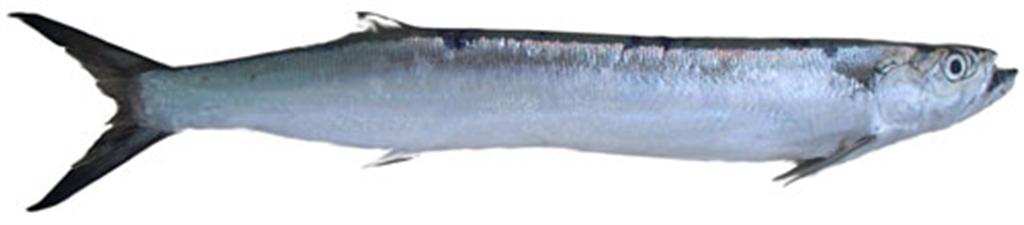
A spot of fishing at an inlet at Cleaverville produced the wierdest fish Bob has ever caught – a wolf herring. Another odd thing happened at the Karratha Golf Course – their 10th hole is called the Moose Hole and if a player has a score of 10 or over they have to run around the green whilst yelling like a moose !! Fortunately, neither Bob nor Siobhan performed the famous yelling run.
And here is a closer look at that wolf herring.
North West Shelf Gas Project
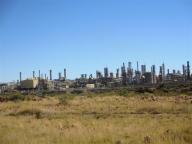
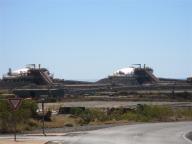
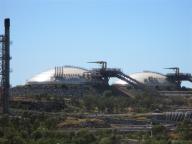
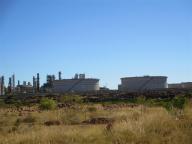
Located at the tip of the Burrup Peninsula, close to Karratha and Dampier, is the North West Shelf Venture (NWSV) – Australia’s first Liquid Natural Gas project. In 2014, the project celebrates 30 years of domestic gas production and 25 years of LNG cargoes to Japanese customers. The project is based on vast undersea natural gas and crude oil resources. It is currently Australia’s largest operating oil and gas development.
Collectively, six venture participants have invested in onshore and offshore oil and gas facilities totalling more than $29.5 billion. If it was built today, it would cost more than $50 billion. The project is Western Australia’s largest producer of domestic gas – providing about 65 percent of the State’s total production. It also accounts for more than 40 percent of Australia’s oil and gas production and is a major producer of liquefied natural gas, natural gas, liquid petroleum gas (LPG), condensate and crude oil. The North West Shelf is currently the 6th largest LNG producer in the world.
Dampier
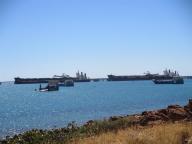
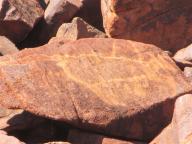
Dampier is a major industrial port in the northwest of Western Australia. The port services petrochemical, salt, iron ore and natural gas export industries. Rio Tinto exports large volumes of iron ore through the port. North of Dampier lies the Burrup Peninsula, or Murujuga, which means “Hip Bone Sticking Out” in the Yaburrara language, which is home to what is believed to be the largest collection of petroglyphs (ancient rock art) in the world. The port of Dampier was opened in 1966, when the first iron ore from the Mount Tom Price mine was transported via the Hamersley & Robe River railway. The port has an annual loading capacity of 140 million tonnes of iron ore. It takes from 24 to 36 hours to load a ship at port.
Red Dog
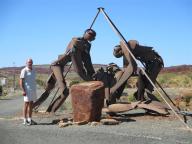
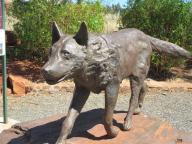
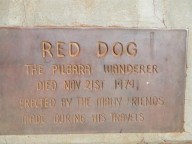
One of Dampier’s main claims to fame is as the home of the famous Red Dog Statue. Red Dog (c. 1971 – 21 November 1979) was a Kelpie/cattle dog cross that was well known for his travels through Western Australia’s Pilbara region, most often visiting Dampier. Red Dog is believed to have been born in the town of Paraburdoo in 1971 and had a variety of names to those who knew him, including: Bluey, Tally Ho, and Dog of the Northwest. Tally Ho was his first name, given to him by a man called Col Cummings, who is believed to have been his first owner and the one who brought him to Dampier. The nickname “Red Dog” has been attributed to the red dirt of the Pilbara Region. His second owner was John Stazzonelli, a bus/truck driver with Hamersley Iron, whose work allowed Red to travel as far as Perth, Broome, Roebourne, Point Samson and Port Hedland.
Following Stazzonelli’s death in 1975, Red spent a lot of time travelling on his own. He was also taken in by many members of the community and a veterinarian who treated him. Red was made a member of the Dampier Salts Sport and Social Club and the Transport Workers’ Union. He was also given a bank account with the Bank of New South Wales, which is said to have used him as a mascot and sales tool with the slogan “If Red banks at the Wales, then you can too.”. Although he had many friends, it is believed that his death in 1979 was caused by deliberate strychnine poisoning. Red is buried in an unmarked grave somewhere in Roebourne, Western Australia.
Karratha and Cleaverville
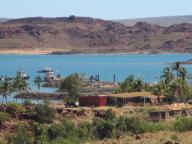
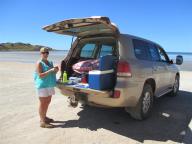
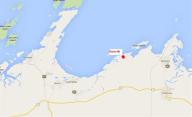
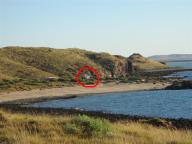
From Onslow, we head further north west and base ourselves at a nature-based bush camp at Cleaverville for a week. This is an ideal spot as it is central to the area and lets us visit the local towns of Karratha, Dampier, Roebourne, Wickham, Cossack and Point Sampson. We find a beautifully isolated spot with the ocean literally on our doorstep. Spot the caravan in the picture circled in red.
Siobhan and I have been extremely impressed with both the State and Local Governments of Western Australia. There are an abundance of Rest Areas, Free Camps, Bush Camps and National Parks where it is relatively easy to spend little money to stay and be treated to some wonderful places and sights. We are now pleased we invested in solar panels which has given us the freedom to spend time much closer to nature.
Onslow And Old Onslow
After reaching the coast road again we head back up north to visit the places we missed by taking a detour to Karijini N P. The first stop we make is to free camp on the Ashburton River close to the ruins Old Onslow. (New) Onslow is now the site of the relocated town and is situated nearby on the Pilbara coast, 1,386 Kms north of Perth.
Onslow is not the place to live if you do not like cyclones !! Between late January and early March 1961 three cyclones smashed into the town and gave it 900 millimetres in five weeks, or just under 3 feet of water. On 15 May 1943, Onslow became the most southerly town in Australia to be bombed by the Japanese in World War 2, when a single plane bombed the airfield. However, there was no damage or casualties.
Onslow’s other claim to fame is to have been the site of a major supply base in the 1950’s in support of atomic bomb tests on nearby islands.
Tom Price
Tom Price is a town situated in the Pilbara region of Western Australia. It is a mining town we pass through from Karijini N P on the way back to the coast. It may sound a strange name for a town and there is an interesting history – the town was named after Thomas Moore Price, who worked for the American Company, Kaiser Steel. He arrived in the area in the early 1960’s to appraise deposits of ore and was instrumental in convincing the mining companies to mine in the area. He also played a major role in lobbying the State and Federal Government to allow mining to proceed and for the ore to be exported. In September 1962 at the age of 71 Tom Price returned to America. He passed away from a heart attack at his desk, only two hours after being advised of the very rich ore deposit discovered on a mountain in the town. In recognition of Thomas Moore Price and his efforts during the foundation of the industry, the mountain and the town, the town of Tom Price was named after him.
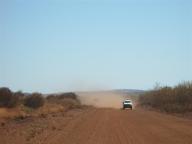
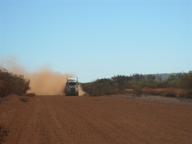
Dusty In The Pilbara ?
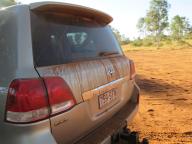
Ever wondered how much dust there is in north west WA ? Well, this is what it is like to meet a truck on a dirt road.
Karijini National Park
Karijini National Park is in the Hamersley Ranges of the Pilbara region in northwestern Western Australia. It is just north of the Tropic of Capricorn, approximately 1,055 Kms north of Perth. Formerly known as Hamersley National Park, it was renamed in 1991. At 627,442 hectares (1,550,440 acres), it is the second largest national park in Western Australia (Karlamilyi National Park is larger).
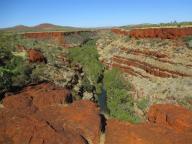
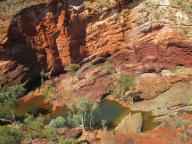
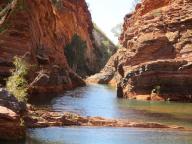
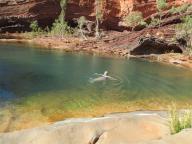
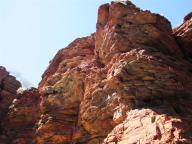
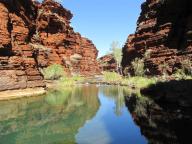
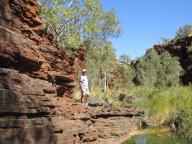
We have seen many National Parks on our travels but Karijini rates very highly. It contains many gorges which are very accessible and stand out because of the rich, dark redness of the stone which contrasts with the bright green flora which almost sparkles in the ever present sunlight.
We spend a week based in the National Park at a bush camp and make daily trips to the many different gorges.
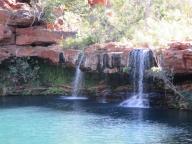
Dales Gorge – did gorge rim walk, then down to circular pool along the gorge base to Fortescue Falls then back up to the top of the gorge.
Mount Bruce – the second tallest peak in WA, overlooking the huge Marandoo mine site.
Hammersley Gorge – spectacular rock formations (folds) with a lovely swimming hole at the base.
Kalamina Gorge – a gentle walk down to the bottom of the gorge to view the waterfall upstream and then walk along the stream to rock arch pool.
Oxer and Joffre Lookouts and Weano Gorge.
Fern Pool – at the top of Fortescue Falls a fern surrounded swimming hole that is also home to fruit bats.