The Road To Strahan

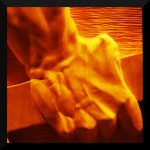
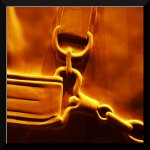
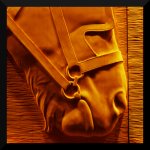
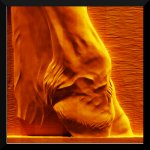
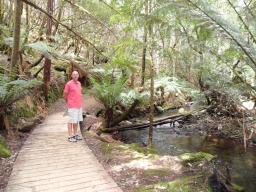
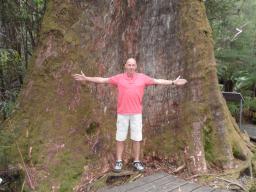
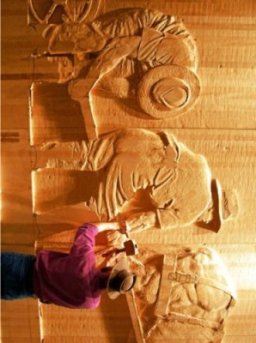
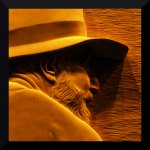
Nov 9  We leave Bothwell with the intention of an overnight stay at Bronte Park. We past through Tarraleah where there is a large hydro-electric plant. The caravan site at Bronte Park sounded lovely on the web but, unfortunately, when we arrived reality bore no relation whatsoever to the brochure. We received our money back, did an immediate u-turn and kept going towards Strahan. We made a stop at the tiny township of Derwent Bridge to visit the remarkable decade long art project by local artist Greg Duncan, known as ‘The Wall In The Wilderness’. This depicts the history of rural life in the region, carved into 3 metre high panels of Huon Pine and on completion will be 100 metres in length. No photography is allowed but here are some images from the web site.
      

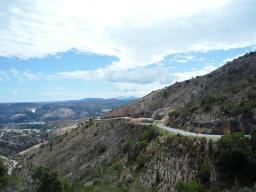
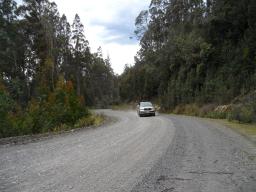
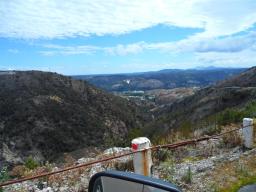
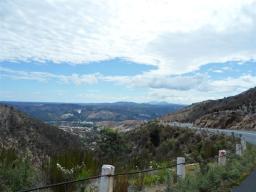
From Derwent Bridge we head down into Queenstown, renowned for the bare grandeur of the surrounding hills, evidence of a history that once made it one of the richest mining towns in the world. Unfortunately, the methods used in mining copper in the early days have left the surrounding area extremely polluted. No wonder the Green Party are so strong in Tasmania. The drive down into Queenstown is one of the scariest we have encountered on the trip so far.
     

Bothwell

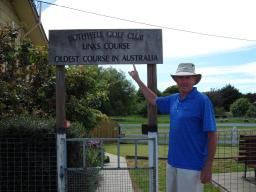
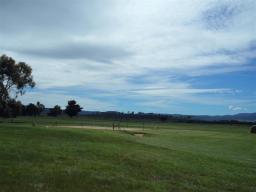
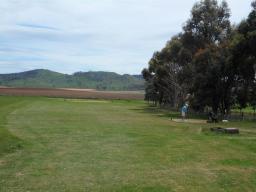
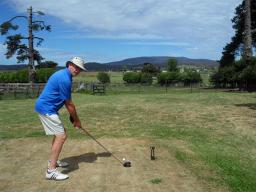
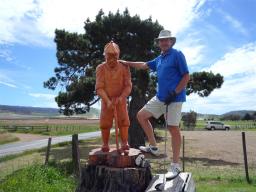
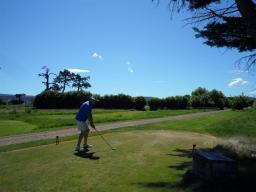
Nov 7, 8  Continuing on our trip to the west coast, we could not miss the opportunity to play the oldest golf course in the Southern Hemisphere, the Ratho Links course at Bothwell. In August 1821, a boatload of Scotsmen and their families emigrated to Van Diemens Land (Tasmania) and many of them settled in the Bothwell area. This may explain the early golf course and the nearby whiskey distillery!

One of the settlers was Alexander Reid who named his land grant ‘Ratho’ after his family farm ‘Ratho Bank’ near Edinburgh. Golf was played at Ratho some time before 1840 Making it the oldest golf course in the Southern Hemisphere. If it could be proved that clubs and featheries (golf balls) came out with Alexander Reid in 1822, the course would be the oldest outside the UK.

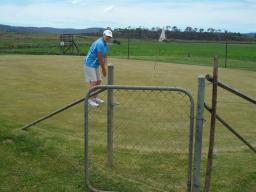
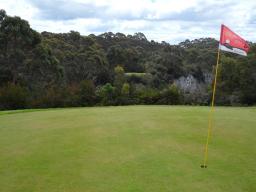
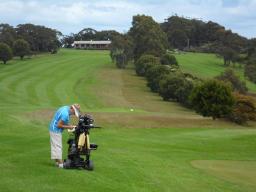
The course hasn’t changed much since it was formed with sheep keeping the fairway grass low and fences around the square shaped greens to keep the sheep off. Some holes have their tees behind fences and / or hedges !!


Tasman Peninsula

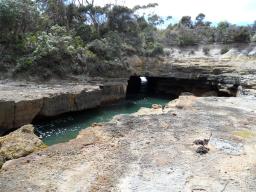
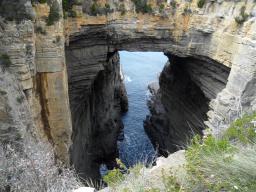
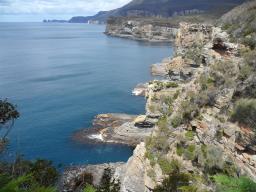
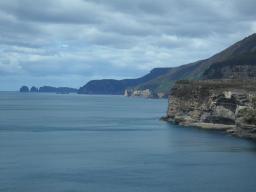
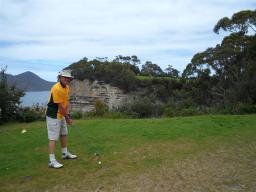
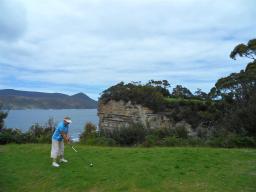
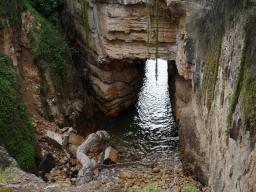
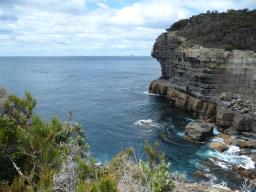
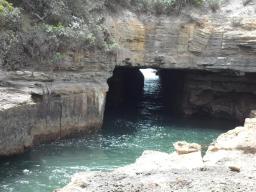
Nov 3, 4  The visit to Port Arthur and the Tasman Peninsula is completed with some more sightseeing to see some geological formations, namely 3 forms of blowholes caused by wave action erosion plus some more spectacular scenery on the coast. A round of golf at the 9 hole Tasman Golf Club featured a great challenge at the 8th hole where there is nothing but cliffs and ocean between tee and green.


Port Arthur Historic Site

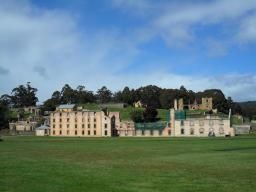
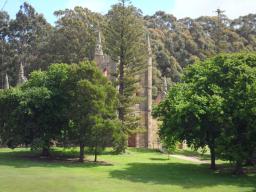
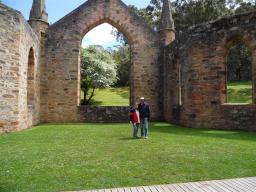
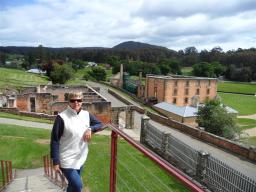
Nov 2,3  Port Arthur is a place of National and International significance, part of the epic story of the settlement of Australia. It was more than a prison, it was a complete community, home to military personnel and free settlers. The imported convicts worked at farming and industries, producing a large range of resources and materials.

In 1830 Port Arthur Penal Station was established and from 1833 it was used as a punishment station for repeat offenders from all the Australian colonies. By 1840 more than 2,000 convicts, soldiers and civil staff lived at the site. The penal settlement finally closed in 1877.

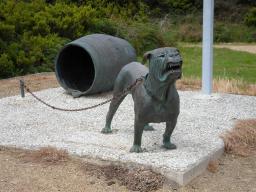
Port Arthur was known as the ‘gaol without walls’ because of its geographically isolated position on a peninsula surrounded by water with a very narrow 9o metre isthmus of land connecting it to the rest of the state at Eaglehawk neck. As a disincentive for escape there was a ‘dog line’ of nine viscious dogs used to alert soldiers to any attempt of convict escape.

On Sunday 28th April 1996, a tragic chapter was added to Port Arthur’s history when a local gunman took the lives of 35 people and physically wounded 19 others in and around the Port Arthur Historic site. The gunman was caught and is still serving 35 consecutive life sentences in Hobart jail.


Arrival At Port Arthur

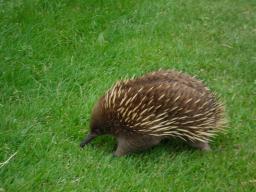
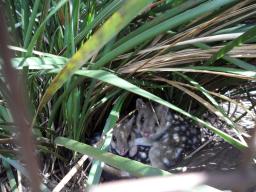
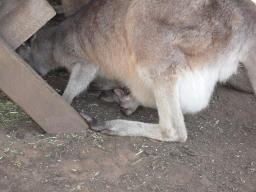
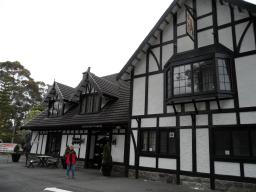
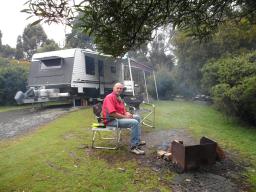
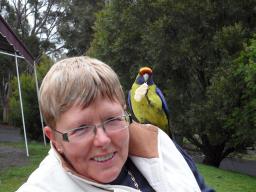
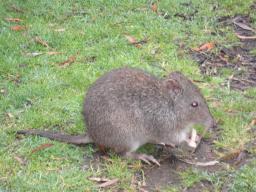
Nov 1  Port Arthur is 80 Kms south east of Hobart on the Tasman Peninsula and is one of the most significant sites in Australia related to convict importation from the UK … but more of that later. Our caravan site is situated in a beautiful parkland setting with some interesting local wildlife, including the bilby and green lorikeet. Open fires were also allowed. There was a really nice local pub which looked really English (and it served Guiness on tap!).
     

Last Day At Hobart

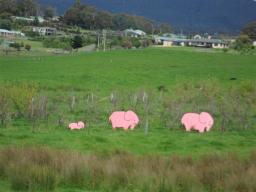
Oct 31  The D’Entrecasteaux Channel is a region of water between Bruny Island and the south-east of the mainland of Tasmania. It extends between the estuaries of the Derwent and the Huon Rivers. It was sighted by Abel Tasman in 1642 and surveyed in 1792 by Bruni d’Entrecasteaux. We visit a sheep cheesery, a blow hole caused by wave erosion, Eggs and Bacon Bay, Peppermint Bay and lunched at Hartzview winery and restaurant. Tasmanians have a wierd sense of humour – please see the pictures of the hay bales.