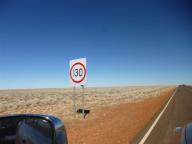
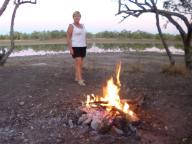
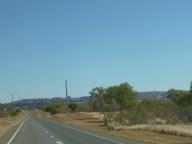
Aug 11 After 83 days and over 7,000 kilometres driven, we finally manage to escape our home state of Queensland.
Here are some interesting facts about Queensland :
• With an area of 1,727,000 square kilometres, Queensland is the second largest state in Australia. The biggest is Western Australia. Queensland is nearly 5 times the size of Japan, 7 times the size of Great Britain and 2.5 times the size of Texas.
• Queensland has 5 of Australia’s 11 World Natural Heritage areas. These include the Scenic Rim National Parks, Fraser Island, Riversleigh Fossil Fields, the Wet Tropics (including Daintree National Park), and 1 of the Wonders of the World—the Great Barrier Reef.
• More than half of Queensland’s population lives outside the greater metropolitan area of Brisbane—a large proportion compared with the rest of highly urbanised Australia.
• About 1/3 of Queenslanders are migrants or the children of migrants. Most settlers in Queensland during the 19th century were from Britain and Europe. In recent years there has been an increasing number of new settlers from South-East Asia.
• Queensland is home to more than 4 million people.
• The vast majority of Queensland receives an average of between 8 and 9 hours of sunshine every day.
• The multi-award winning Tjapukai Dance Theatre in Kuranda, North Queensland, featured in the 1997 Guinness Book of Records as the entry for the longest running show in Australia. The show ran from May 1987 to July 1996, with more than 7,000 performances and 1.2 million visitors.
• Queensland has more than 1000 species of native vertebrates, many of them unique to the region.
• The first Labor government in the world took office in Queensland in 1899.
• The international airline Qantas (Queensland and Northern Territory Aerial Services) was established in Longreach, Queensland, in 1920.
• There are over 200 national parks in Queensland, covering 6.5 million hectares.
• Four Queenslanders have been Prime Minister of Australia—Andrew Fisher (3 times: 1908–1909, 1910–1913 and 1914–1915), Arthur Fadden (1941), Francis Forde (1945) and Kevin Rudd (2007–2010).
• Free education was implemented in Queensland in 1870.
• The first Queensland railway opened in July 1865, from Ipswich to Grandchester.
• XXXX beer is one of Queensland’s well-known products and was established back in 1877.
• On 18 May 1907, women voted for the first time in a Queensland state election.
• Brisbane-born pioneer aviator Charles Kingsford Smith and his colleagues completed the first air crossing of the Pacific, from San Francisco to Brisbane, in 1928.
• Australian poet Banjo Patterson’s verse Waltzing Matilda was first sung publicly at the North Gregory Hotel in Winton, Queensland, on 6 April 1895.
• Queensland has the only State Parliament in Australia with 1 House, the Legislative Assembly. The Legislative Council (Upper House) was abolished in 1922.
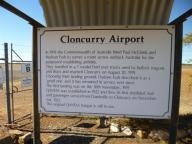
• The Royal Flying Doctor Service started operating on 17 May 1928, when pilot Arthur Affleck flew the first flying doctor, Dr Kenyon St Vincent Welch, on the first official flight from Cloncurry to Julia Creek in response to an emergency call.
• The Australian Labor Party was formed in Queensland in 1891 following the bitter defeat of the shearer’s strikes of 1890–91.















 BOB AND SIOBHÁN'S CARAVAN ADVENTURES