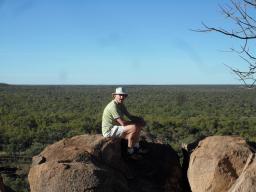
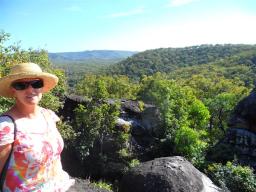
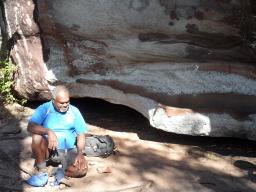
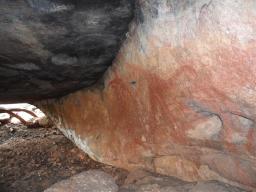
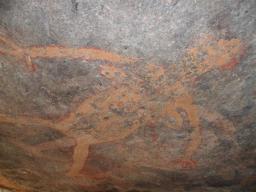
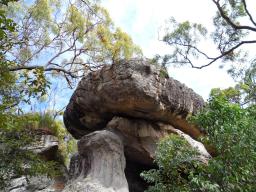
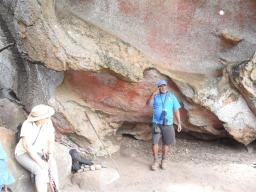
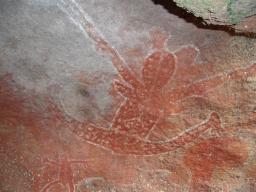
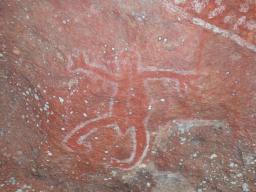
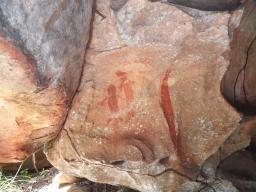
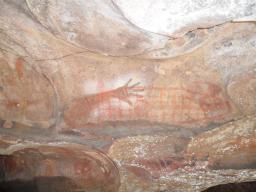
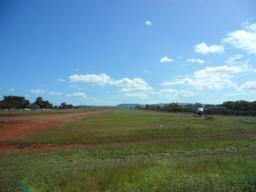
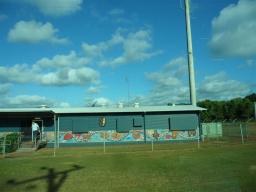
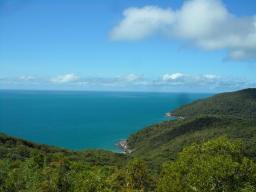
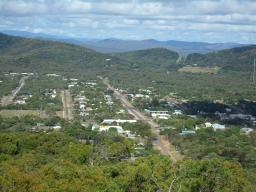
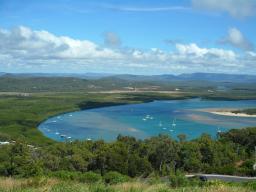
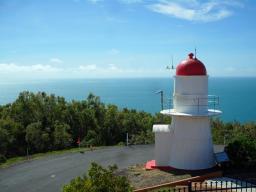
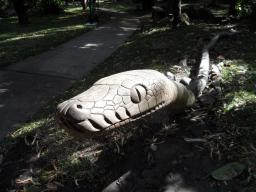
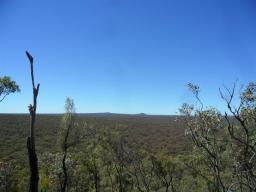
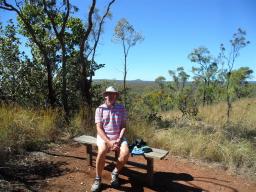
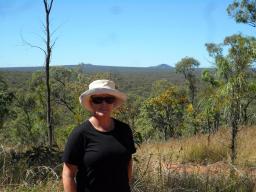
Jun 20 We join Willi, a Nugul-Warra elder, on a tour to see the Nugal rock art sites hidden high in the hills above Hope Valley. Willi explains the meaning behind the art and gave us a unique insight into aboriginal spirituality and survival. (Note the unique way the local police station has been decorated.)
Author: bobandsiobhand
Cooktown
Jun 15 to Jul 3 Cooktown is as far north we can get in Queensland without travelling on dirt roads. Even so, we are still 2,150 Kms north of Brisbane and the average daily temperature here so far has been 26 degs, some 8 to 10 degs warmer than the Sunshine Coast.
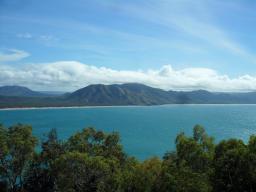
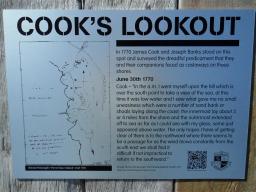
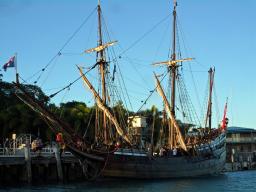
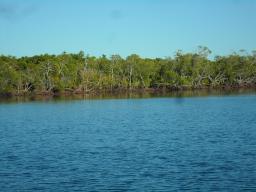
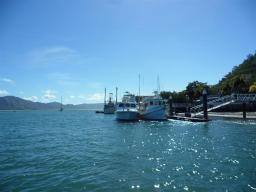
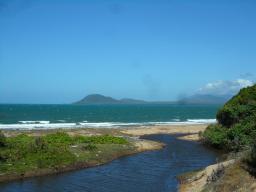
Cooktown is a small town located at the mouth of the Endeavour River, on Cape York peninsula in far north Queensland. It is where Captain James Cook beached his ship, the Endeavour, for repairs in 1770. Cooktown’s population is approx 1,400. Both the town and Mount Cook (431 metres or 1,415 feet) which rises up behind the town were named after James Cook. It is the northernmost town on the east coast of Australia and was founded on 25 October 1873 as a supply port for the goldfields along the Palmer River. It was called ‘Cook’s Town’ until 1 June 1874.
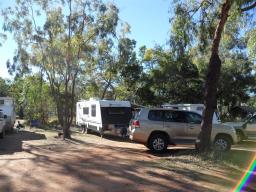
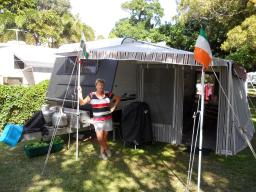
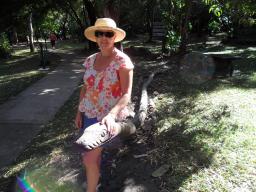
We plan to stay in Cooktown for about 3 weeks so we choose a large camp site and get comfortable. There is a new addition to the camp – Siobhan has created a herb garden which has already contributed to the cuisine.
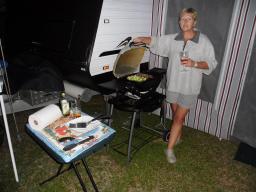
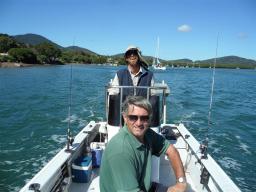
Bob spends a morning fishing with a local guide. Unfortunately, the weather denied the opportunity of bagging a Spanish Mackerel, so a FingerMark Bream offerred itself for a lovely fresh seafood dinner in its place.
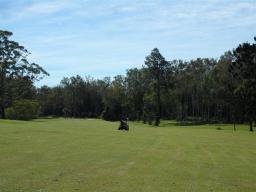
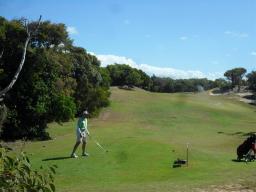
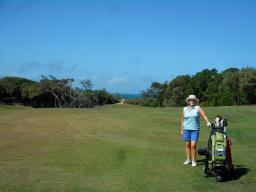
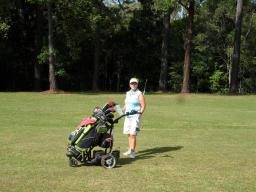
The local Botanic Gardens have some fascinating plants. The local botanist is focussing on growing as many of the 200 plus original plants that Banks (the botanist on the Endeavour) took back to England with him. There is a small but challenging 9 hole golf course in Cooktown which provides us with some fun.
Cairns To Cooktown
Jun 14 We make the 326 Km trip from Cairns to Cooktown via the inland route as the direct coast route is impassable to caravans. We will show you why in our later blog when we head down to Cape Tribulation using the direct route.
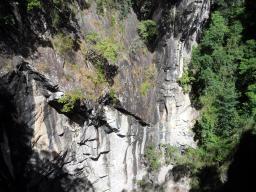
About 20 Kms south of Cooktown is Black Mountain, a quite unique rock formation. The mountain’s distinctive hard granite boulders originally formed out of magma that first slowly solidified under the Earth’s crust about 250 million years ago. The softer land surfaces above the solidified magma eroded away over time, leaving the magma’s fractured top to be exposed as a mountain of grey granite boulders blackened by a film of microscopic blue-green algae growing on the exposed surfaces. Colder rains falling on the dark, heated granite boulders causes the boulders to progressively fracture, break, and slowly disintegrate, sometimes explosively, leaving the mountain of boulders that can be seen today.
Cairns
Atherton
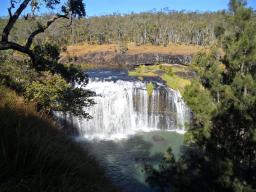
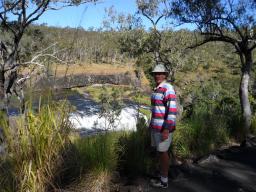
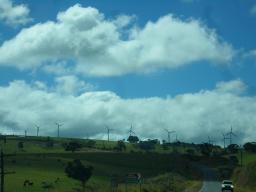
Jun 9 to 11 Next stop Atherton which is the main town on the Atherton Tablelands, inland from Cairns, famous for its fertile soils, dairy farming and wonderful scenery. On the way we stop at Millstream Falls which claims to be the widest single drop waterfall in Australia. Then we pass a wind farm just off the main highway.
After a pleasant round of golf at the local Atherton Golf Club, we head up to Lake Tinaroo, which has a bit of a story as to how it was named : James Mulligan was the first European explorer and prospector to visit the Atherton Tablelands in 1875. The area is named after another explorer, John Atherton who, it is reported, upon discovering alluvial tin deposits in the area, shouted ‘Tin, Harroo’ to his prospecting buddy, hence the name.
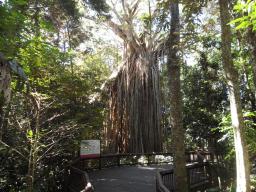
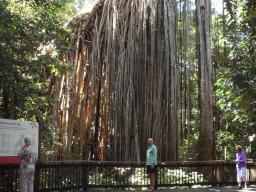
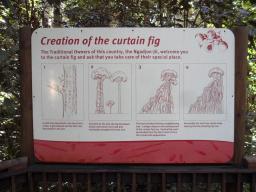
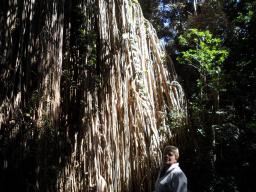
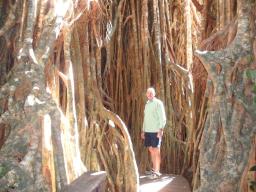
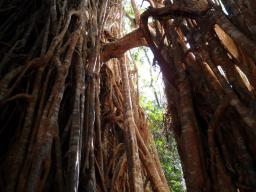
On the way we stop at 2 truly amazing and famous fig trees, the Curtain Fig and the Cathedral Fig. The Curtain Fig is one of the largest trees in Tropical North Queensland, located just out of Yungaburra. It is of the strangler fig species. Normally these figs germinate on top of another tree and try to grow roots into the ground. Once this important step is accomplished, the fig will grow vigorously, finally kill the hosting tree and then grow on independently. In this case, the hosting tree tilted towards the next one; the fig also grows around that one. Its curtain of aerial roots drops 15 metres (49 feet) to the ground. Although these figs kill their hosts, they basically feeds from the ground, unlike a parasitic plant which feeds from the sap of the host plant/tree.
More From Around Undara
The Lava Tube Photos
Undara National Park and the Lava Tubes
Jun 5 to 9 A milestone occurred on the road from Charters Towers to Undara National Park : 100,000 Kms on the Toyota Landcruiser. We stopped for a while for it to get its breath back !!
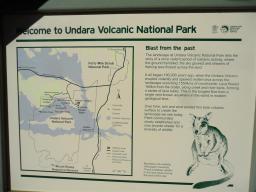
For millions of years Undara was an active shield volcano. About 190,000 years ago there was a massive eruption and lava flowed more than 90 km to the north and over 160 km to the north-west. An estimated 23.3 km3 of lava flowed from the volcano at a rate of about 1000 m3 every second. A lava flow this large could fill Sydney Harbour in six days. It is thought that the lava flowed at a temperature of around 1200 °C.
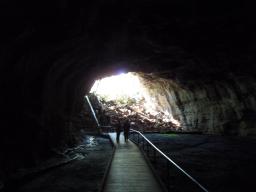
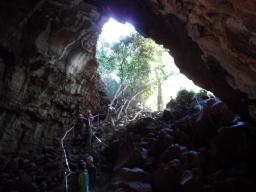
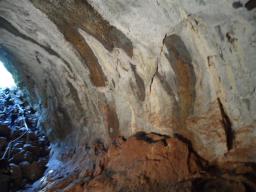
The lava tubes and caves were formed when rivers of lava confined to a valley crusted over and formed a roof. Insulated in its casing of solidified lava, the lava flow carried on for many tens of kilometres before draining out, leaving an empty tube of lava. Weaker sections of the roof of the tubes later collapsed to form caves and depressions. More than 50 caves have been found in the park.
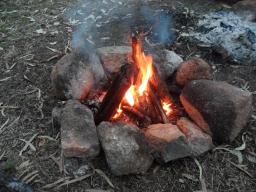
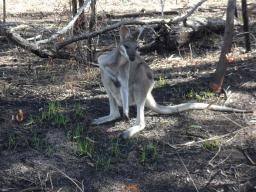
The Undara lava tube system is Australia’s longest, and one of the longest in the world. We explore some of the lava tubes and also meet some of the abundant wildlife. On one 4 hour trip we see 9 separate species of macropods (kangaroos, etc), including, eastern greys. wallaroos, pretty face or whiptail, Mareeba rock wallabies. A small bettong visits our camp fire one evening.
Charters Towers
June 2 to 4 Charters Towers is 130 Kms inland west of Townsville. It was founded in the 1870’s when gold was found by chance at Towers Hill by a 12 year old aboriginal boy, Jupiter Mossman. After becoming uneconomic in the 20th century, profitable mining operations have commenced once again. We really liked the name of a property we came across during a drive outside the town : Drinkastubbie Downs !!
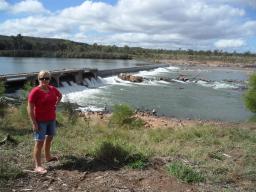
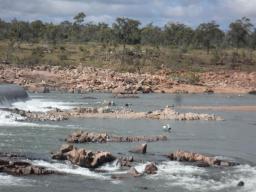
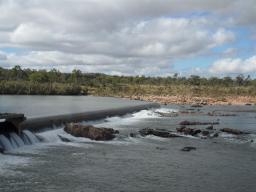
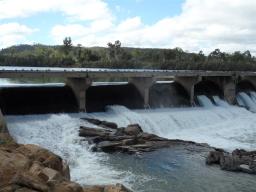
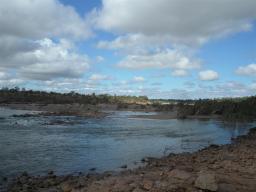
Last year we spent a great time at Groper Creek fishing and crabbing. We complete a circle by driving 15 Kms out of town to visit A large weir on the Burdekin River, the same river we were camped beside last year at Groper Creek.
Hughenden
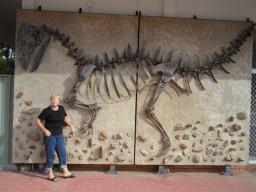
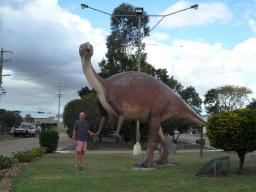
June 1 Hughenden is known as the centre for all things dinosaur in Australia. The town was named after Hughenden Manor, the home of former British Prime Minister, Benjamin Disraeli. It is home to the Hughenden Dinosaur Festival. Take a peek at the cute dinosaur feet rubbish bins that appear all over town.